How Should A Bra-Sized Bikini Top Fit?
A bra-sized bikini top can make swimwear shopping feel much easier, especially if standard S/M/L tops never seem to match both your bust and your body. But the number and letter on the tag are only the starting point.
A bikini top still needs to pass the real fit test: Does it feel secure through the underbust? Do the cups contain you without cutting in or gaping? Do the straps help stabilize the top without doing all the work? And does everything stay where you want it when you move?
Here is how to check the fit before you keep a bra-sized bikini top, whether you are shopping for more support, more coverage, a better cup fit, or simply a swim top that feels more like it was made for your shape.
Quick Answer: A Bra-Sized Bikini Top Should Feel Secure, Not Tight

A bra-sized bikini top should usually feel firm and secure through the underbust, smooth through the cups, and comfortable enough to move in. The cups should contain your breast tissue without spilling, flattening, wrinkling, or leaving empty space. The straps should help stabilize the fit, not carry all the support by themselves.
Think of your bra size as a helpful starting point, not a guarantee. Swimwear fit can change depending on the brand, the size system, the fabric, the cup shape, the coverage level, and whether the top is underwire, wireless, halter, bandeau, plunge, or fuller coverage.
A good bra-sized bikini top should feel snug and secure on your body without making you feel squeezed, pulled, or constantly in need of adjustment.
How Bra-Sized Swimwear Differs From Your Favorite Bra
Bra-sized swimwear may use familiar band and cup sizing, but it will not always feel exactly like your favorite bra. Swim fabric, lining, stretch, cup construction, water use, and coverage all change how the top behaves on your body.
If your favorite bra is an underwire bra, you may be used to a very structured frame, a firmer band, and a specific cup shape. A bra-sized bikini top may still offer underwire support, but the front, neckline, straps, and fabric can feel different because it is made for swimming, sun, and movement.
That does not mean the swim top is wrong. It just means you should judge the fit by how the bikini top actually sits, supports, and stays in place, not only by whether the size label matches your lingerie drawer.
Bra-Sized Swimsuits Still Need A Real Fit Check
Bra-sized swimsuits, bikini tops, tankini tops, and one-piece styles can all use cup sizing to give you a better starting point. But size is only one part of the fit.
The right features matter too. Look at the underbust, cup depth, strap placement, wire shape, neckline, and back closure. Those details help turn the size on the tag into a more tailored fit for your body, instead of another swimsuit that almost works but still needs constant adjusting.
Start With The Underbust Area

The underbust area is one of the most important parts of a bra-sized bikini top. In a regular bra, we often talk about the band doing most of the support work. In swimwear, the same idea matters, even though the construction may look different.
Some bikini tops have a hook back, some tie, and some have a more flexible swimwear band. Either way, the underbust should help anchor the top close to your body. If that part is too loose, the cups and straps usually have to work harder than they should.
A secure underbust fit should usually:
- Sit close to the body without floating away
- Feel firm enough to keep the top in place
- Stay level or close to level as you move
- Support the cups without relying only on the straps
- Feel comfortable enough to breathe, sit, and move naturally
Swim fabric can feel a little different from bra fabric, especially once it gets wet. That is one reason it helps to check the fit with movement, not just by standing still in front of the mirror.
Signs The Underbust Fit May Be Too Loose
The underbust area may be too loose if the top shifts around, rides up, slides under the bust, or only feels supportive after you tighten the straps a lot. You may also notice that the cups look fine at first, but the whole top moves when you lift your arms or bend forward.
A loose underbust can also make cup fit harder to judge. If the top is not anchored, the cups may gape, tilt forward, or feel less supportive even when the cup size itself is close.
Signs The Underbust Fit May Be Too Tight
The underbust area may be too tight if it digs sharply, rolls, pinches, makes the cups pull oddly, or feels uncomfortable before you even start moving. A firmer fit is normal in supportive swimwear, but it should not make you feel restricted or sore.
If the cups seem distorted, the wires pull out of position, or the top feels secure but uncomfortable, the underbust size, style, or fabric may not be right for you.
Check The Cups For Containment, Gaping, And Shape

Once the underbust feels close, look at the cups. The goal is not for the bikini top to fit exactly like an everyday bra, but the cup should still work with your breast shape instead of fighting it.
A well-fitting cup should usually:
- Contain breast tissue without cutting in
- Avoid spilling over the top, sides, or bottom
- Sit smoothly without major wrinkles or empty space
- Keep the bust feeling supported and centered
- Match the coverage level you want for swimming, lounging, or walking around
Bra-sized bikini tops are especially helpful when your bust and body do not fit neatly into standard S/M/L swim sizing. For example, a medium bikini top may feel right around the body but still feel too small, too shallow, or too loose through the bust.
Measurements and size charts can usually help you choose a better starting point than general swim sizing alone. If you often need a smaller band size and a fuller cup, or if regular bikini tops feel too small in the bust but too loose around the body, cup-sized swimwear may give you more control over the fit.
For a broader explanation of why cup sizing can help in swimwear, read what bathing suit bra size means for swimwear fit.
If The Cups Cut In Or Spill
If breast tissue spills over the top, presses out at the sides, or feels pushed downward, the cup may be too small, too shallow, or too low in coverage for your shape. Sometimes a larger cup helps. Other times, a different style is the better answer. These can be signs that the bikini top is too small in the cup, although cup shape and coverage can create similar symptoms.
For example, a plunge bikini top may feel pretty and secure on one body, but too open at the neckline on another. A fuller coverage bikini top may offer more containment if your main concern is feeling secure when you bend, sit, or swim.
Also check the underbust before assuming the cup is the only issue. If the band area is loose, the top may shift and create spillage that looks like a cup-size problem.
If The Cups Gap Or Wrinkle
Gapping does not always mean the cup is too large. It can be a sign that the cup is too tall, too molded, too shallow, or simply the wrong shape for your breast tissue. It can also happen when the underbust area is not anchoring the top well.
If the cup wrinkles throughout, you may need a smaller cup or a different cup shape. If only the top edge gaps, a softer cup, lower neckline, different strap position, or different style may solve the issue better than changing size alone.
Molded swim cups can be especially shape-specific. If a molded cup expects more fullness in one area than your body naturally has, it may gap even when the size is close.
Compare Bikini Styles, Not Just Cup Size
Cup size matters, but bikini styles matter too. Two bikini tops in the same size can fit very differently if one is a plunge, one is a halter, one is a balconette, and one is a fuller coverage style.
A plunge neckline may flatter an outfit or neckline you love, but it may not feel secure enough if you want more containment. A bandeau may feel easy and stylish for lounging, but it may not give every shopper the same amount of support. A halter can work beautifully for some women, while others feel too much pressure at the neck.
A supportive bikini top can still be stylish. The key is choosing a style that matches your shape, your comfort level, and how you actually plan to wear it.
Look At Wires, Seams, And The Front Of The Top

If your bikini top has underwire, the wire should usually sit around the breast tissue, not on top of it. It should not poke into the underarm, press into the breast, or float far away from the body.
If the top is wire-free, look for support from the underbust, cup seams, lining, side panels, and strap placement. A wire-free bikini top does not need to mimic an underwire frame, but it should still contain the bust and stay stable when you move.
That said, swimwear does not always fit exactly like a structured everyday bra. Some bikini tops have a lower front, a softer center, or a different frame because they are designed for swim fabric and beachwear styling. The important question is whether the top feels secure and whether the wire or frame is sitting in a comfortable, supportive position.
Seams can also tell you a lot. In many cup-sized bikini tops, seams are there to shape and support the bust, not just decorate the top. If seams pull sharply, wrinkle heavily, or land in an uncomfortable spot, the cup shape may not be matching your body well.
Straps Should Stabilize, Not Carry Everything
Straps are important, but they should not be doing the entire job. If you have to tighten the straps until they dig just to feel supported, the underbust area or cup style may not be giving you enough structure.
A good strap fit should usually feel secure without pulling the top out of position. Adjustable straps can help fine-tune how close the cups stay to the body, but they should not replace the support coming from the band or be the only reason the bikini top feels lifted.
Halter bikini tops deserve extra attention. A halter can work beautifully for some shoppers, but if the top needs a lot of strap tension to feel supportive, that pressure may shift to the neck. If you like the look of a halter but find it uncomfortable, you may prefer an over-the-shoulder style, a wider strap, a firmer underbust, or a bikini top with more cup structure.
Bikini Top, Tankini, Or One-Piece Swimsuit?

The right fit also depends on how you plan to use the swimsuit. A bikini top that feels secure for relaxing by the pool may not be the one you would choose for swimming with kids, walking on the beach, or swimming laps.
Ask yourself:
- Do I want more neckline coverage?
- Do I need more side containment?
- Will I be swimming, lounging, walking, or playing in the water?
- Do I feel secure when I sit, bend, and move?
- Do I prefer a plunge shape, balconette shape, halter, bandeau, or fuller coverage top?
- Would tankini tops or a one-piece swimsuit better match the coverage I want?
For fuller bust swimwear, coverage and structure often matter as much as size. A larger cup alone may not solve the fit if the style is too open, too shallow, or too stretchy for what you need.
A one-piece swimsuit or tankini can sometimes be a better option when you want more torso coverage or a different kind of support. That does not mean a bikini top is wrong. It simply means the right swim style should match how you actually want to wear it.
If you are comparing options, browse bra-sized swimwear or bikini tops with the fit issue in mind, not just the size label.
Do A Simple Movement Check Before You Keep It
A bikini top can look fine when you are standing still and still feel wrong once you move. Before deciding on the fit, do a few gentle checks.
Try:
- Lifting your arms
- Sitting down
- Bending slightly forward
- Twisting side to side
- Adjusting the straps to a comfortable level
- Checking whether the cups stay smooth and secure
- Checking whether the underbust stays anchored
You should not have to constantly pull the top up, tug the cups back into place, or tighten the straps just to feel covered. Some adjustment is normal with swimwear, but the top should feel like it is working with you.
Some swim fabrics may relax once wet. If a top already feels loose when dry, it may not feel more secure in the water.
Should Your Bikini Top Match Your Bra Size?

Your everyday bra size is a helpful starting point for bra-sized swimsuits and other bra-sized swim pieces, but it may not be the final answer. Swimwear brands can use different sizing systems, cup shapes, fabrics, and fit blocks. A 34F in one brand may not feel the same as a 34F in another.
This is especially important with UK, US, EU, and French sizing, where the same cup letter can mean different things depending on the brand. Many brands size swimwear differently, which is why it helps to measure carefully and compare charts before choosing.
If sizing questions come up, start with measurements and then compare them with the brand’s chart. The cup-sized bikini size chart can help when you are choosing bikini tops in bra sizes, and the broader swimwear size chart can help when you are comparing swim styles across different sizing formats.
Sister sizes can also help when the cup feels close but the band fit is off. Just remember that sister sizing changes more than the letter. It also changes how the band feels and how the cup sits on the body, so it is still something to check in the actual style you are trying.
Why A C Cup And A G Cup May Need Different Features
A C cup and a G cup can both benefit from bra-sized swimwear, but they may not need the same construction. One shopper may want lighter shaping and a smoother neckline, while another may need deeper cups, stronger underwire support, wider straps, or a firmer underbust.
The point is not that one size is harder or easier to fit. The point is that cup size is only one clue. The features of the bikini top still need to match your body, your breast shape, and how much support you want.
If you are between sizes, pay attention to both the underbust and the cup. A top that is close in the cup but loose around the body may not feel supportive. A top that is secure around the body but too small or shallow in the cup may feel restrictive or create spillage. The right answer may be a size change, but it may also be a different shape or coverage level.
When To Try A Different Size Or A Different Style

Fit issues do not always mean you chose the wrong size. Sometimes they mean the style is not right for your body or your swimwear needs.
You may want to try a different cup size if:
- The cups cut in at the top
- Breast tissue spills at the sides
- The cup wrinkles throughout
- The cup feels empty in more than one area
- The wire or seam does not sit around the breast comfortably
You may want to try a different underbust size or adjustment if:
- The top rides up
- The back feels loose
- The cups shift when you move
- You need the straps extremely tight for support
- The underbust digs sharply or feels restrictive
You may want to try a different style if:
- A plunge neckline feels too open
- A molded cup keeps gaping
- A halter puts too much pressure on your neck
- A bandeau does not feel secure enough
- You need more side coverage or a deeper cup
- You want a top that feels better for swimming, not just lounging
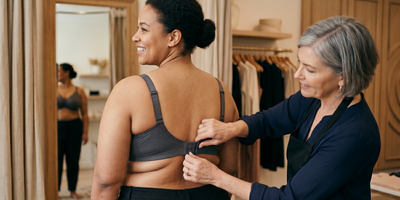
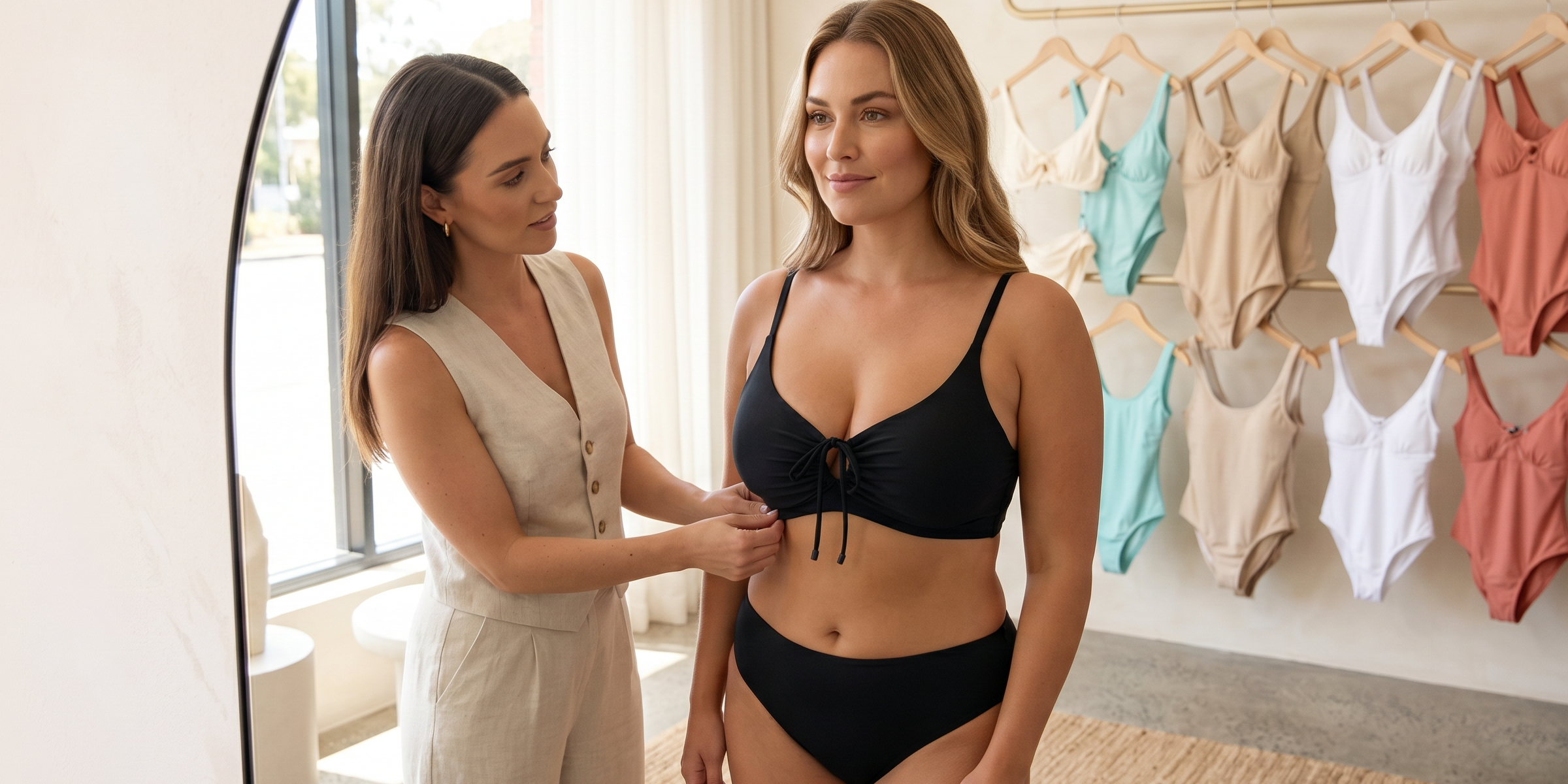
This is where a fitter’s eye can save a lot of guessing. If you are not sure whether the size, shape, or style is the issue, a professional fitting can help you compare swimwear options that match your shape and support needs much faster.
Helpful Next Steps

If you are new to bra-sized swimwear, start with the fit basics before choosing by color or print. Look for the underbust support, cup depth, strap structure, and coverage level that match how you want to wear the top.
If you already know standard swim sizing is not working for you, bra-sized swimwear can give you more control over cup and body fit. You may also see more structured options described as swim bras. The label can be helpful, but the real question is still whether the swim style gives you the fit, support, and coverage you want.
If you are specifically shopping separates, bra-sized bikini tops may make it easier to pair the top size you need with the bottom size you prefer. If you want more coverage, tankini tops or one-piece suits may be worth comparing too.
And if you want more personal help, you can book a fitting appointment and let The Bra Diva team help you find swimwear in a more fit-focused way.
Bra-Sized Bikini Top Fit FAQs
Should my bikini top size be the same as my bra size?
Your bra size is usually a good starting point, but it is not a guarantee. Swimwear fit can vary by brand, fabric, cup shape, coverage level, and sizing system. Check the brand’s size chart and use the fit of the underbust and cups to decide whether the size is actually working.
How should an underwire bikini top fit?
An underwire bikini top should usually sit around the breast tissue without poking, pressing on breast tissue, or floating far away from the body. Some swimwear fronts are lower or softer than everyday bras, so the most important checks are comfort, cup containment, and whether the wire feels supportive without digging.
Why does my bra-sized bikini top still gap?
Gapping can happen when the cup is too large, but it can also happen when the cup is too tall, too molded, too shallow, or not the right shape for your breast tissue. It may also happen if the underbust area is not anchoring the top securely. Try checking the band area, strap tension, and cup shape before assuming the size alone is wrong.
Are bra-sized bikini tops only for large busts?
No. Bra-sized bikini tops can be especially helpful for full-bust shoppers, but they are not only for large busts. They can help anyone whose bust, band, or body proportions do not match standard S/M/L swim sizing very well.
What should I try if the cups fit but the top does not feel secure?
Start by checking the underbust area. If the cups fit but the top shifts, rides up, or depends too much on tight straps, the underbust may not be secure enough or the style may not offer the structure you need. A different back style, firmer underbust, wider strap, or more supportive cup construction may be a better match.