How To Tell If A Sports Bra Gives Enough Support For A Fuller Bust
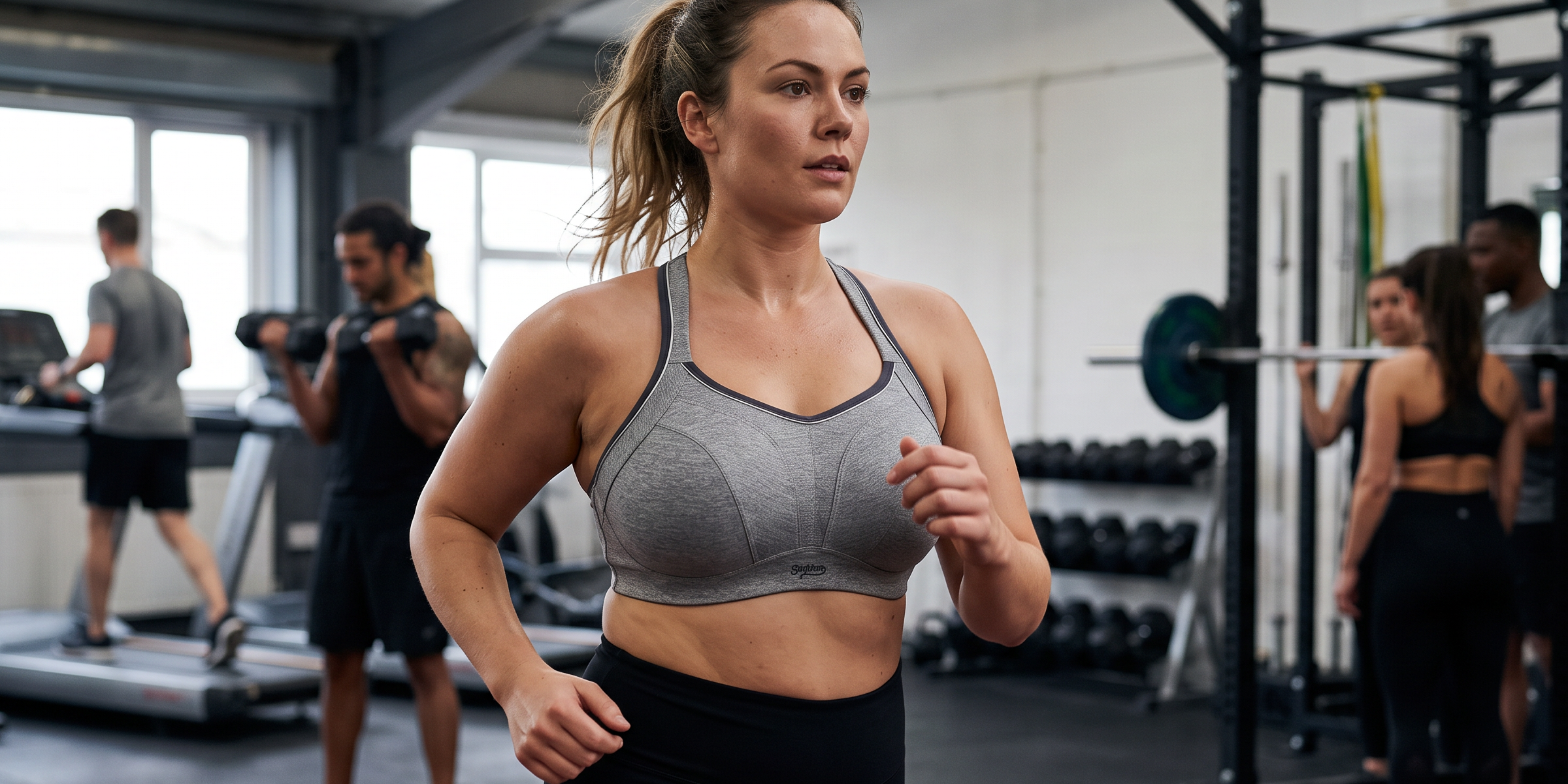
If you have a fuller bust, you can usually tell a sports bra gives enough support when it controls movement without simply squeezing you. The band should stay firm and level, the cups should contain your bust without spilling or gaping, the straps should stabilize without carrying all the weight, and the support level should match your activity.
A sports bra can look supportive on the hanger and feel completely different once you move. It may feel tight in the fitting room, then bounce, shift, flatten, dig, or make you feel as though the straps are doing all the work.
Support needs vary by activity, body, breast shape, bust size, and bra construction. Breast movement also varies from person to person. The goal is not to eliminate every bit of movement. It is to reduce movement enough that you feel secure, comfortable, and able to focus on what you are doing.
Here is how to assess the band, cups, compression or encapsulation, straps, comfort, and movement control before you decide whether a sports bra is supportive enough for you.
The Quick Answer: How A Good Sports Bra Should Feel

A good sports bra for a fuller bust should feel firm, contained, and steady. You should feel held in place, but not crushed.
A supportive sports bra usually has:
- A firm band that stays level around the body
- Cups that contain the bust without spilling or gaping
- Enough coverage for the way you move
- Straps that stabilize without carrying all the weight
- Fabric and construction that help control movement
- A support level that matches your activity
A well-fitting sports bra should feel secure in motion, not just tight while you stand still. Some compression can be useful, but fuller-bust shoppers often need more structured support than light stretch or compression alone can provide.
If you are shopping from scratch, browse sports bras for different activity levels, then use the checks below to narrow down what works for your body.
Match Low, Medium, Or High Support To Your Activity
The first question is not only, “What size am I?” It is also, “What do I need this bra to do?”
Different types of sports and workouts create different movement patterns. A sports bra for walking, stretching, or light strength training may not need the same control as one for running, jumping, HIIT, tennis, court sports, or mountain biking on rough terrain. High-intensity activities that involve repeated impact or quick direction changes usually call for stronger support.
As a practical starting point:
- Low impact or light support may work for stretching, gentle yoga, walking, or light daily movement.
- Medium impact may work for hiking, cycling, Pilates, weight training, or studio classes, depending on your bust and movement level.
- High impact is usually a better starting point for running, jumping, HIIT, cardio classes, court sports, or other activities where bounce control is a major concern.
For a fuller bust, it is common to prefer more support than an activity label suggests, but not everyone will need the same level. Support needs differ across bust sizes, and cup volume, breast shape, tissue softness, band fit, and comfort preferences all affect what feels secure.
If you already know you need stronger movement control, compare high-impact sports bras before settling for a lighter style.
Band Size And Fit: The Underband Should Anchor The Bra

The band is one of the most important parts of sports bra support. The right band size should sit comfortably around the ribcage, close to the chest wall, and stay level as you move.
A supportive sports bra band should usually:
- Sit flat against the body
- Stay level in the front and back
- Feel firm without curling or folding
- Stay in place when you lift your arms
- Give the bra an anchored feeling from below the bust
If the band is too loose or made mainly from very stretchy fabric, the bra may shift, bounce, or ride up. If it is too tight, it may roll, dig, or make breathing uncomfortable. You may be able to slide two fingers under the band, but that is only a loose comfort check. The better test is whether the band stays anchored while you move.
If the band rides up, many shoppers tighten the straps. That usually shifts pressure to the shoulders instead of fixing the anchor. Lift your arms, twist gently, and take a few deep breaths. The band should stay put without cutting into you. For a deeper band check, see what a riding-up bra band may be telling you.
Cup Size And Coverage Levels: Containment Without Spilling Or Gaping

For a fuller bust, cup size and shape are just as important as band fit. The cups should contain breast tissue without spillage, uncomfortable flattening, obvious empty space, or tissue being pushed toward the underarm.
A sports bra cup should usually:
- Hold the bust inside the cup area
- Keep the neckline from cutting in
- Avoid obvious gaping, wrinkling, or shifting
- Provide enough depth for the breast tissue
- Stay secure when you bend, stretch, or jog in place
If the cups are too small or shallow, you may see overflow at the top, center, or underarm, or the bra may press the bust down and outward. If the cups are too large or too open at the neckline, the bust may shift inside them once you move. If gaping is the main problem, our guide to bra cups gapping at the top explains why size is not the only possible cause.
Cup-sized sports bras can be especially helpful because the band and cup can be chosen more precisely than with basic small, medium, or large sizing. Your everyday bra size is a useful starting point, but brand sizing and sports bra construction still vary.
Use the sports bra size chart to choose a starting size, then confirm the fit with the movement test below.
High Coverage Is Not Automatically Better
High coverage, a higher neckline, or fuller side coverage can help some shoppers feel more secure during running, jumping, or quick movement. But if the cup is too shallow or the neckline cuts in, extra fabric will not create a better fit. Compare coverage levels by how well they contain your bust comfortably during the intended activity.
Your Everyday Bra Size Is Only A Starting Point
Your sports bra size may be close to your everyday bra size, but it should still be checked in motion. A sports bra has a different job because it has to control activity-related movement, not just support you through a typical day.
Some high-support styles may also feel comfortable enough for everyday wear, but daily comfort does not prove that the same bra will control movement during a workout.
A sister size may help in some styles, but it is not a guaranteed fix. Changing the band changes the bra’s anchor, and changing the cup affects how the bust is contained. When using a size chart, follow the brand’s requested bust measurement and ribcage measurement rather than assuming one chest size maps consistently across brands. If you are between sizes, compare both bras with the same movement test. The better choice is usually the one that stays anchored, contains the bust, and remains comfortable for the intended activity, not simply the one that feels tightest.
If you are unsure where the sports bra fit is going wrong, revisit the broader bra-fit checklist before assuming the size label tells the whole story.
Different Types Of Sports Bras: Compression, Encapsulation, Or Both?

Sports bras usually control movement through compression, encapsulation, or a combination of both.
Compression sports bras use a compressive fit to hold the bust closer to the body. They can work well for some lower-impact activities or for shoppers who prefer a held-in feel. For some fuller busts, compression alone may feel too flattening or may not provide enough control for running and jumping.
Encapsulation sports bras use shaped or individual cups to support each breast individually. Seams, molded structure, or underwire can provide separation and movement control without relying only on pressing the bust flat.
Hybrid bras combine compression and encapsulation. They can hold the bust closer to the body while also providing cup shape, separation, and structured support.
No construction is right for everyone. Some fuller-bust shoppers prefer underwire sports bras. Others do well in wire-free styles with strong seaming, a firm band, stable fabric, and secure coverage. The useful question is whether the bra controls movement comfortably for your body and activity.
Straps Should Stabilize, Not Do All The Work
Sports bra straps should feel stable, but they should not be the main source of support. If they dig, pull, or create heavy shoulder pressure, the band or cups may not be doing enough.
Wider straps can distribute pressure, adjustable straps can fine-tune the fit, and racerback or J-hook options may help some shoppers keep the straps stable. Pullover styles can also work, but without an adjustable band or straps, their fixed proportions need to suit both your ribcage and cup volume. None of these features can make up for a loose band or shallow cups. You should be able to move your arms without the straps slipping, cutting, or pulling the cups out of place.
Test Breast Movement And Comfort Before You Decide
A sports bra cannot be judged only while you are standing still. Move in a way that reflects how you plan to use it.
Try:
- Raising both arms overhead
- Twisting gently from side to side
- Bending forward
- Walking quickly or jogging lightly in place
- Reaching across your body
- Taking several deep breaths
Then notice what changed. Did the band ride up? Did the bust move more than feels comfortable for the activity? Did tissue spill at the top or sides? Did the straps dig? Did the cups shift? Did the bra begin to chafe, pinch, or restrict your breathing?
Some movement is natural. A sports bra can help minimize movement to a level that feels secure and comfortable for the activity, but no bra can promise zero bounce.
Breathable materials and moisture-wicking fabric may help you stay comfortable by managing heat and perspiration. They are useful comfort features, but they do not replace a stable band, adequate cup depth, or the right support level.
Signs You May Be Wearing The Wrong Sports Bra
Common signs include:
- More bounce than feels comfortable for the activity
- The band riding up, rolling, or shifting
- The bust moving inside or separately from the cups
- Spillage at the top, center, or sides
- Straps digging because they are doing too much work
- The neckline feeling too open during movement
- The bra needing repeated adjustment
A bra can feel tight and still provide the wrong kind of support. If it squeezes but the bust still shifts or bounces, the cup shape, construction, band fit, or support level may not match what you need.
If your main concern is cup depth, containment, and fuller-bust stability, compare sports bras for large breasts. Fuller bust and plus size are not the same fit need. Fuller bust usually refers to greater cup volume, while plus size generally refers to a broader band or body-size range. Some shoppers need both. If that describes you, the plus-size sports bra collection may be the more useful next step.
Signs The Bra May Be Too Tight Or The Wrong Shape
Too tight is not the same as supportive. Check for:
- A band that digs sharply or rolls under the bust
- Restricted breathing
- Uncomfortable flattening or tissue pushed toward the underarm
- A neckline that cuts into the top of the bust
- Strong strap pressure after only a short time
- Chafing, pinching, or pain
- A compressed feeling combined with too much movement
A firm band is normal in many sports bras. A trapped, painful, or restrictive feeling is different. A shallow cup can also make the whole bra feel too tight even when a larger band is not the answer.
When To Try A Different Size, Support Level, Or Sports Bra Style
Change one variable at a time when you can. If the band rides up, start with the band fit. If the band stays put but tissue spills or shifts, look at cup size, depth, or coverage. If the fit seems right but movement still feels excessive for the activity, compare a higher support level or a more structured construction.
Key features such as cup-sized options, a stable band, deeper cups, side support, adjustable straps, stronger fabric, and structured cups can all help. Different styles distribute pressure and control movement differently, so no single feature guarantees enough support.
If you are also comparing sports bras with everyday supportive styles, see our guide to bra styles for a larger bust.
When A Fitting Can Help

A sports bra can be tricky because it has to fit both your body and your movement. A fitting can be especially helpful when:
- The band feels tight but the bust still moves
- The cups spill, gap, or flatten
- You are between sizes
- You are unsure about underwire versus wire-free construction
- You need stronger support for running or jumping
- You have tried several styles and none feel right
- You keep layering two sports bras to feel secure
A professional fitting can help you compare size, cup shape, impact level, and construction instead of guessing one change at a time. You can book a fitting appointment with The Bra Diva for more personalized help.
Sports Bra Support FAQs
How tight should a sports bra be for a fuller bust?
A sports bra should feel firm and secure without restricting your breathing or causing pain. The band should stay level, the cups should contain the bust, and you should be able to move naturally. If the bra feels tight but the bust still shifts or bounces too much for the activity, the issue may be cup shape, construction, or support level rather than tightness alone.
Is compression or encapsulation better for a fuller bust?
Encapsulation or a hybrid design is often a useful starting point because shaped or separate cups can provide more individual support and movement control. Compression can also work, especially for lower-impact activity or shoppers who prefer that feel. The better choice depends on your activity, breast shape, comfort preferences, and how the bra fits in motion.
Can I wear a regular bra for exercise?
An everyday bra may feel supportive during normal daily movement, but it is not usually designed to control workout-related bounce. A sports bra is generally the better starting point for exercise because its band, straps, cups, and fabric are designed with movement in mind. The amount of support you need still depends on the activity.
Do I need an underwire sports bra for a larger bust?
Not necessarily. Some fuller-bust shoppers prefer underwire sports bras for separation and cup structure. Others prefer wire-free sports bras with strong seaming, a firm band, stable fabric, and enough coverage. What matters is how the bra controls movement and feels during your intended activity.
Should I wear two sports bras for extra support?
Layering two sports bras may add compression, but it can also create bulk, shifting, strap pressure, chafing, or an overly tight feeling. If you regularly need two bras to feel secure, it is worth comparing whether one sports bra with a more suitable band, cup shape, construction, and support level can do the job more comfortably.
How do I know if my sports bra is the wrong size?
Your sports bra may be the wrong size if the band rides up, the cups spill or gap, the straps dig, or the bust shifts inside the bra. It may also be the wrong shape or support level if it feels very tight but still does not control movement. Check the band and cups together, then test the bra against the activity you plan to do.
When should I replace a sports bra?
There is no universal replacement schedule because wear depends on the bra, how often you use it, your activity, and how it is washed. Reassess the fit if the band no longer recovers, the fabric loses elasticity, the cups or seams change shape, the straps stay stretched, or the bra no longer controls movement as it once did. Those changes are more useful than relying only on the bra’s age.
The Bottom Line On Sports Bra Support For A Fuller Bust
A supportive sports bra should do more than feel tight. It should anchor through the band, contain the bust through the cups, stabilize through the straps, and control movement enough for your activity.
If the bra shifts, spills, digs, chafes, restricts your breathing, or lets the bust move more than feels comfortable, treat that as useful fit information. You may need a different size, cup shape, support level, or construction.
The right sports bra should help you move with less adjusting and more ease. It is not about forcing your body into the tightest bra. It is about finding support that works with the way your body moves.